Short answer: Amazon gives you buyers on day one but takes a bigger cut and keeps the customer relationship. Shopify gives you your own brand, customer data and higher margins, but you have to bring every visitor yourself. For most new product brands we recommend starting on Amazon to prove demand, then adding Shopify once the product sells. Brands with strong content, an existing audience or high-margin products can start on Shopify first.
In this article
"Should we sell on Amazon or build our own Shopify store?" It's one of the first questions new clients ask. People expect us to pick a side. Our answer is usually "both, but in the right order", and the order depends on your product, your budget and what you're good at.
We build Shopify stores and manage Amazon accounts, so we don't have a reason to push one over the other. Here is how we actually decide.
Shopify vs Amazon at a glance
| Amazon (FBA) | Shopify | |
|---|---|---|
| Traffic | Huge built-in buyer traffic | None by default; you bring it |
| Main costs | Referral fee (around 15% in most categories), FBA fees, ads, monthly Pro plan | Monthly plan, payment processing, apps, ads |
| Customer data | Very limited; Amazon owns the relationship | Full: emails, phone numbers, purchase history |
| Branding | Template listing, A+ content, Brand Store | Full control of design and experience |
| Speed to first sale | Fast if the listing and ads are right | Slower; needs ads, content or an audience |
| Rules and risk | Strict policies, account health, possible suspensions | Your store, your rules |
| Best for | Proving demand, search-driven products | Brand building, repeat buyers, higher margins |
The real cost on one $30 product
Fees decide which channel is more profitable, so let's run one illustrative example. Check Amazon's selling fees and Shopify's pricing for current numbers in your category.
| Per order ($30 product) | Amazon FBA | Shopify |
|---|---|---|
| Marketplace / referral fee | -$4.50 | $0 |
| Fulfilment | approx. -$5.50 (FBA fee) | approx. -$6.50 (3PL pick, pack and postage) |
| Payment processing | Included | approx. -$1.20 |
| Product cost | -$8.00 | -$8.00 |
| Ad cost to get the sale | approx. -$5.00 (PPC) | approx. -$9.00 (Meta/Google, cold traffic) |
| Profit per order | approx. $7.00 | approx. $5.30 |
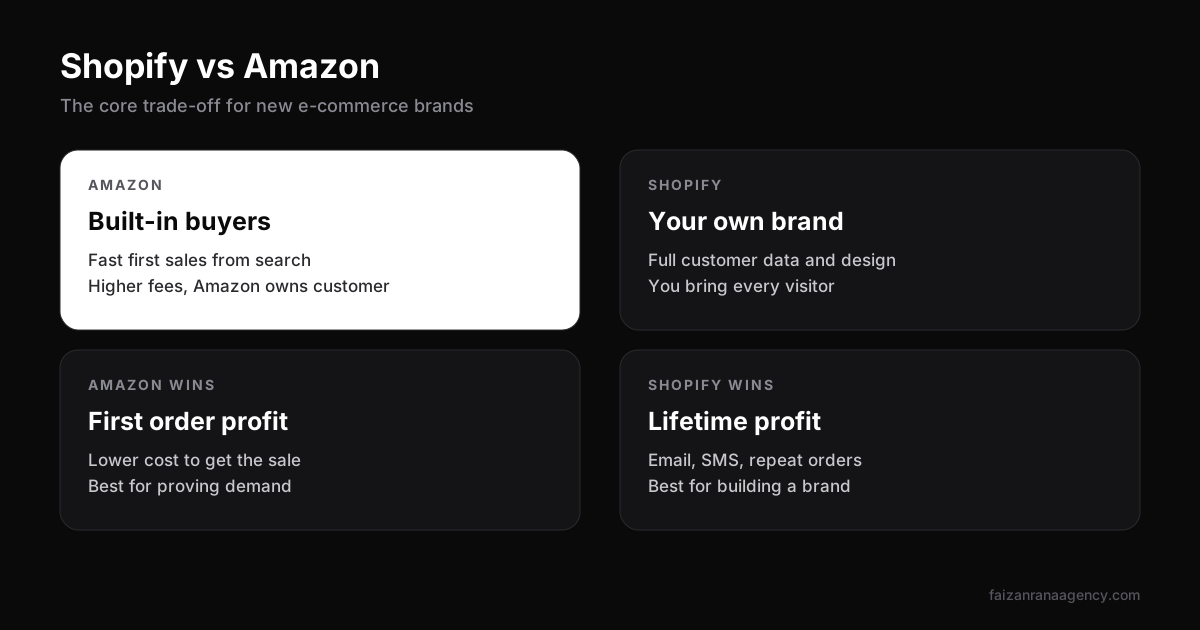
On the first order, Amazon often wins because buyers are already searching and ready to buy. Shopify wins over time: repeat orders through email and SMS cost almost nothing to acquire, and your profit per customer climbs. That's the core trade-off.
When Amazon first makes sense
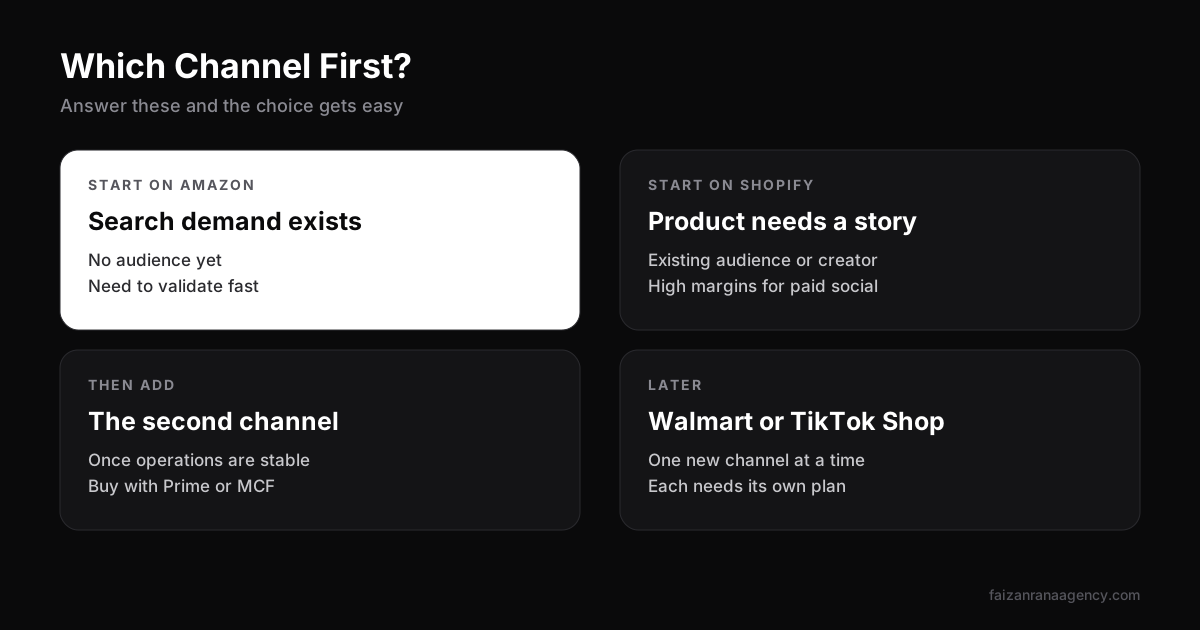
- People already search for your product. If there's clear search demand for "bamboo cutting board set", Amazon puts you in front of those buyers.
- You don't have an audience yet. No email list, no social following, no content engine.
- You want to validate a product fast before investing in a full brand site.
- Your product is a repeat-purchase consumable that benefits from Subscribe and Save.
If that's you, follow our Amazon product launch playbook before anything else.
When Shopify first makes sense
- Your product needs explaining. New categories, custom products or premium items that need a story to justify the price.
- You already have an audience. Creators, influencers, and brands with a social following convert that traffic best on their own site.
- Your margins are high and you can afford paid social to find buyers.
- Your category is restricted or crowded on Amazon, or the product is hard to ship through FBA.
Shopify-first brands live or die by paid social. Read why Meta Ads still work for e-commerce before you plan a budget.
How to run both without chaos
Running two channels used to mean two inventories and twice the headaches. Today it's simpler:
- Buy with Prime on Shopify. Shows the Prime badge and delivery promise on your own store, fulfilled from your FBA inventory.
- Amazon Multi-Channel Fulfillment (MCF). Ships Shopify orders from FBA stock, so you keep one inventory pool.
- Consistent pricing. Keep prices aligned. A much cheaper price on your site can hurt your Featured Offer on Amazon.
- Use each channel for what it's good at. Amazon for search buyers, Shopify for bundles, subscriptions, email and loyalty.
Adding a third channel
Once Amazon and Shopify are stable, the next channels are usually Walmart Marketplace (search-driven, lower competition in many categories) and TikTok Shop (discovery-driven, great for demonstrable products). Add one at a time. Every new channel needs listings, inventory planning and ads of its own.
AI tools are also making multichannel easier to run, from inventory forecasting to listing updates. We cover the useful ones in AI agents for e-commerce.
Quick decision guide
Want to see what a store we built looks like? Browse our portfolio.
FAQ
Is it better to sell on Shopify or Amazon?
Amazon is usually better for proving demand quickly because buyers are already searching there. Shopify is better for building a brand, owning customer data and earning more from repeat customers. Many brands use both.
Is Amazon FBA cheaper than Shopify?
Per order, Amazon often has higher fees but lower customer acquisition costs. Shopify has lower platform fees, but you pay to bring every visitor, so the cheaper option depends on your traffic and repeat purchase rate.
Can I sell on Amazon and Shopify at the same time?
Yes. Tools like Buy with Prime and Amazon Multi-Channel Fulfillment let you sell on Shopify using your FBA inventory.
Do I need a Shopify store if I sell on Amazon?
Not at first, but a Shopify store lets you collect customer emails, sell bundles and subscriptions, and reduce dependence on a single marketplace.
Which is better for beginners, Shopify or Amazon?
For beginners without an audience, Amazon is usually easier because the traffic already exists. Beginners with a social following often do well starting on Shopify.
Not sure which channel fits your product? Tell us about it and we'll give you a straight answer.
Want us to do this for your brand?
Book a 30-minute call and we will scope your project.