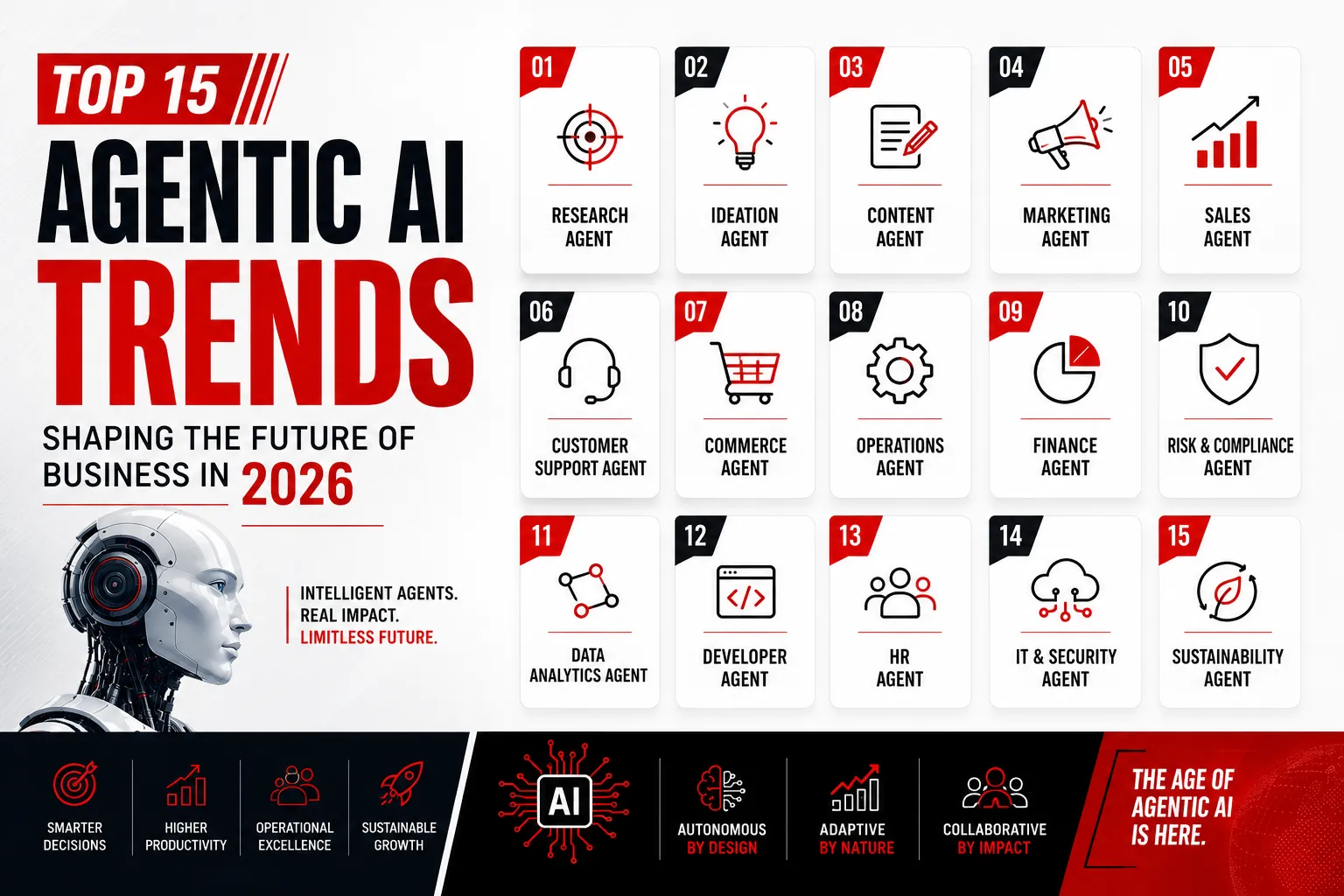
Short answer: AI agents for e-commerce are AI systems that don't just answer questions but complete tasks: finding products for shoppers, adjusting ad budgets, updating listings, answering support tickets, forecasting stock and even checking out on a buyer's behalf. "Agentic commerce" is the shift where these agents start shopping and selling for people. For most brands in 2026, the practical move is to make product data agent-ready and automate a few back-office tasks with human review.
In this article
- What "agentic" actually means
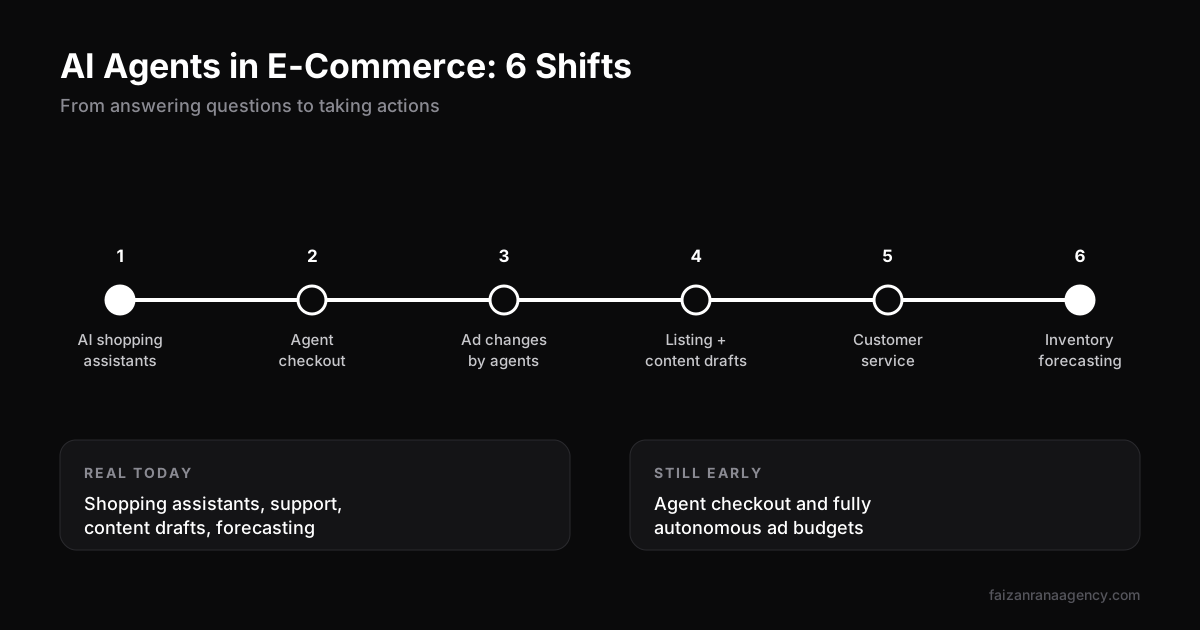
- Shift 1: AI shopping assistants choose products
- Shift 2: Agents can check out for buyers
- Shift 3: Agents running ad changes
- Shift 4: Listing and content updates
- Shift 5: Customer service agents
- Shift 6: Inventory and reorder forecasting
- Hype vs real: our rating
- What to do in the next 90 days
- FAQ
For a couple of years, "AI in e-commerce" mostly meant a chatbot on the website and some AI-written product descriptions. That changed. AI now takes actions: it compares products, fills carts, moves budgets and drafts replies that go out without a person typing them.
Some of this is genuinely useful today. Some is still mostly demos. This guide separates the two, from the point of view of an agency that runs real e-commerce accounts every day.
What "agentic" actually means
A normal AI tool answers. An AI agent acts. You give it a goal ("keep ACoS under 30%", "answer this refund request", "find me a waterproof hiking jacket under $150"), and it decides the steps, uses tools, and completes the task, ideally with guardrails and a human checking the important parts.
Shift 1: AI shopping assistants choose products
Shoppers increasingly ask AI instead of searching. Amazon's Rufus answers product questions inside the Amazon app. ChatGPT, Gemini and Perplexity all recommend products and link to stores.
That changes how products get found. These assistants read titles, descriptions, specs, reviews and structured data, then summarise. Products with vague listings get skipped. We explain what this means for Amazon in how the Amazon ranking algorithm works in 2026, and why clean keyword research still matters when AI writes the summary.
Shift 2: Agents can check out for buyers
This is the core of "agentic commerce". In 2025, OpenAI introduced Instant Checkout in ChatGPT, built on an open Agentic Commerce Protocol developed with Stripe, so shoppers can buy from some merchants without leaving the chat. Google announced an Agent Payments Protocol (AP2) for agent-led purchases, and Amazon began testing a "Buy for Me" feature that buys from other brands' sites on the shopper's behalf.
It's early, and adoption is still small. But the direction is clear: the buyer of the future may be an agent working from a person's instructions. Brands with structured product feeds, clear pricing and reliable stock data will be easier for agents to buy from.
Shift 3: Agents running ad changes
Ad platforms already automate a lot: Meta's Advantage+ and Amazon's dynamic bidding are forms of it. The next step is agents that watch performance and make changes, such as pausing wasted keywords, shifting budget or flagging creative fatigue.
Our view: let agents do the analysis and propose changes, but keep a human approving budget moves for now. One bad rule can burn a month of budget in a weekend. The basics still apply too, as we cover in why your Amazon ACoS is too high.
Shift 4: Listing and content updates
AI can now draft listings, A+ content, product descriptions and ad variations in minutes, and tools like Shopify's built-in AI assistant can make store changes from plain instructions. The time saving is real.
The risk is sameness. If every brand uses the same tool with the same prompts, every listing reads the same. Use AI for first drafts and variations, then add the specifics only you know: real customer language, real specs, real differences.
Shift 5: Customer service agents
Support is where agents are most mature. They can answer "where is my order", process simple returns and handle common questions, connected to order data. Good setups hand anything emotional, unusual or high-value to a person, and log every action.
Shift 6: Inventory and reorder forecasting
Stockouts kill Amazon rankings, and overstock ties up cash. AI forecasting tools look at sales velocity, seasonality and lead times to suggest reorder dates and quantities. For multichannel brands selling on both Shopify and Amazon, a single forecast across channels is especially valuable.
Hype vs real: our rating
| Shift | Ready today? | Our rating |
|---|---|---|
| AI shopping assistants recommending products | Yes, already affecting discovery | Real |
| Customer service agents | Yes, with human handoff | Real |
| Listing and content drafting | Yes, needs human editing | Real |
| Inventory forecasting | Yes, quality depends on your data | Real |
| Agents changing ad budgets on their own | Partly; risky without limits | Early |
| Agents buying on behalf of shoppers | Live in limited form | Early, but coming |
What to do in the next 90 days
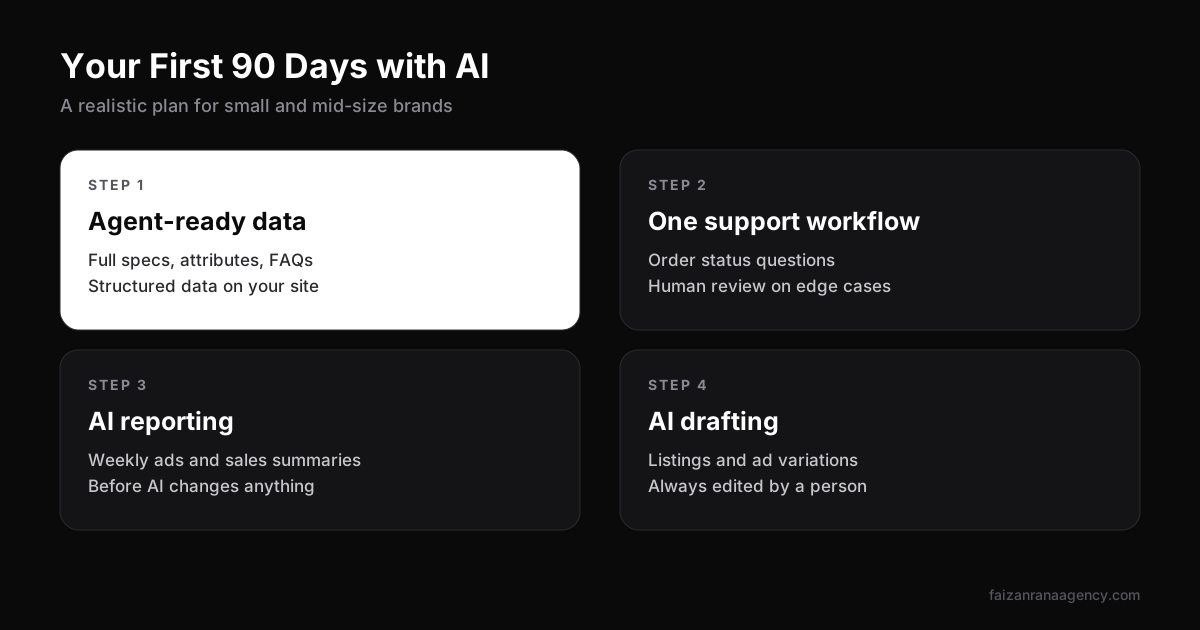
- Make your product data agent-ready. Complete titles, specs, attributes, FAQs and structured data on your site and marketplaces.
- Automate one support workflow, such as order status questions, with human review.
- Use AI for reporting, such as weekly ad and sales summaries, before letting it change anything.
- Test AI drafting for listings and ad variations, always edited by a person.
Want the bigger picture of how to roll AI out across a business, step by step? Read our AI roadmap for e-commerce brands.
FAQ
What are AI agents in e-commerce?
AI agents are AI systems that complete tasks rather than only answering questions, such as recommending products to shoppers, answering support tickets, adjusting ads, updating listings or forecasting inventory.
What is agentic commerce?
Agentic commerce is the shift toward AI agents shopping and buying on behalf of people, and brands selling to those agents, using protocols that let agents check out securely.
How can small e-commerce brands use AI agents?
Start with low-risk tasks: support for order questions, weekly reporting, and drafting listings or ad variations, always with human review before anything goes live.
Will AI agents replace e-commerce marketers?
They are replacing repetitive tasks, not judgment. Strategy, brand voice, offers and approving spend still need people.
How do I make my products visible to AI shopping assistants?
Use clear titles, complete specs and attributes, honest descriptions, FAQs and structured data, so AI assistants can understand and recommend your products.
Curious where AI could save your team the most time? Ask us.
Want us to do this for your brand?
Book a 30-minute call and we will scope your project.