Short answer: The Amazon ranking algorithm decides which products show up for a search and in what order. "A9" was the name of Amazon's original search technology; "A10" is an industry nickname, not an official Amazon term. In 2026 the signals that move rankings most are relevance to the search, conversion rate, sales velocity, price competitiveness and stock availability, with AI-driven search (Rufus) making clear, question-answering listings more important.
In this article
Every few months a new "A10 secret" goes around seller groups. Use this exact title length. Add this many backend keywords. Drive this much external traffic. Most of it is guesswork dressed up as insider knowledge.
We prefer to work from what Amazon has confirmed, plus what we can see happen in the accounts our Amazon SEO team manages. That combination is less exciting than a secret, but it is far more useful. This guide separates the two clearly.
A9, A10 and what Amazon actually says
A9 was the name of Amazon's search and advertising technology unit, and for years sellers used "A9" to mean the ranking algorithm itself. The name stuck.
A10 is not an Amazon term. Around 2019 and 2020, sellers and agencies noticed ranking behaviour change: conversion and external traffic seemed to matter more, and pure keyword matching less. People started calling the new behaviour "A10". Amazon has never announced a product with that name.
So when you read "A9 vs A10", treat it as shorthand for "how Amazon ranking used to work vs how it works now". The useful question is not the name. It is which signals move rankings today.
Amazon's own guidance to sellers is consistent: search results are designed to show customers the products they are most likely to buy. Everything below is a way of proving to Amazon that your product is that product.
The ranking signals that matter in 2026
Here is how we rank the signals, with our confidence level. "Confirmed" means Amazon has said so in seller documentation. "Strong" means we see it consistently across accounts.
| Signal | Why it matters | Confidence |
|---|---|---|
| Relevance (keywords in title, bullets, backend, attributes) | You can't rank for a search Amazon doesn't connect you to | Confirmed |
| Conversion rate for that search | Amazon wants to show products people buy | Strong |
| Sales velocity (recent sales, organic and ad) | Recent demand is a strong signal of a good result | Strong |
| Price competitiveness | Overpriced listings can lose the Featured Offer and visibility | Confirmed |
| In-stock status and fulfilment speed | Out-of-stock listings lose rank fast | Confirmed |
| Reviews and rating | Mostly matter through their effect on conversion | Strong |
| Click-through rate from search | Main image, price and title drive clicks | Strong |
| External traffic that converts | Sales from outside Amazon count toward velocity | Moderate |
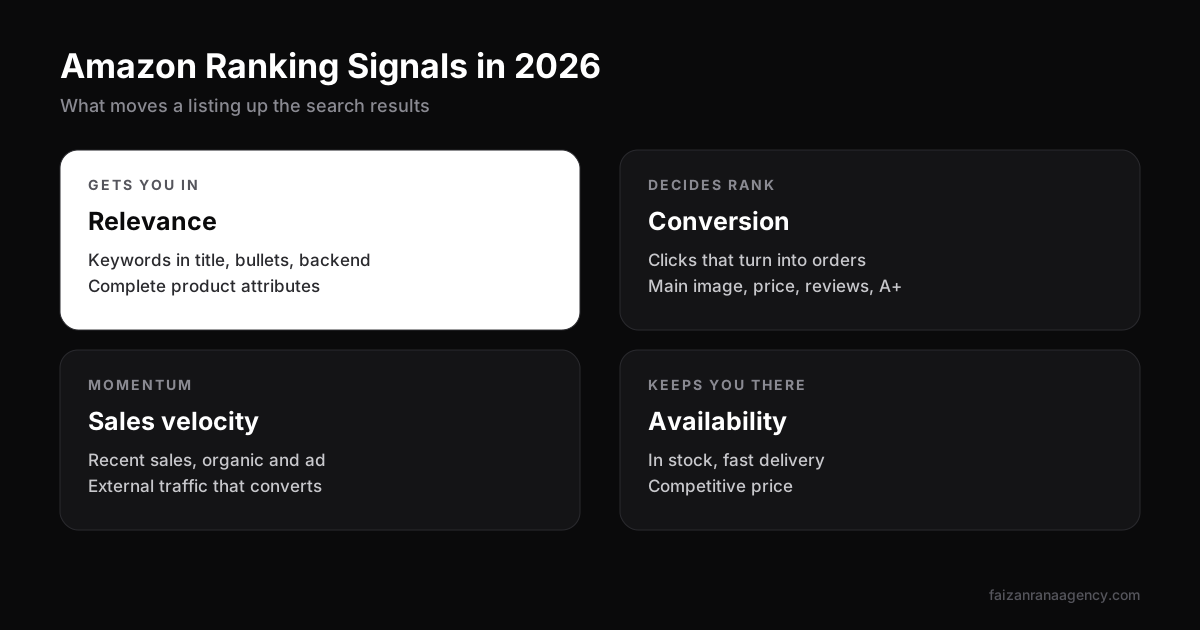
Notice that relevance only gets you into the race. Conversion and sales velocity decide where you finish. That is why a strong keyword research process and a strong listing have to go together.
What sellers still overrate
- Keyword stuffing. Repeating a keyword five times doesn't make you five times more relevant. One clear placement is enough to be indexed. The rest hurts readability and clicks.
- Review count on its own. 2,000 reviews at 3.6 stars often converts worse than 200 reviews at 4.6. Rating and recent review quality matter more than the total.
- "Hacks" for the backend. The backend field is for synonyms and variants. It is not a place to hide competitor brand names, which breaks Amazon policy.
- Daily listing changes. Constant edits make it impossible to know what worked, and some edits can briefly reset indexing.
Rufus and AI search: what changes for listings
Amazon's AI shopping assistant, Rufus, answers questions like "what's a good water bottle for hiking that keeps drinks cold all day?" It reads product titles, bullets, A+ content, reviews and Q&A to build those answers. Amazon has also published research on teaching its systems "common sense" about why people buy things, not just what words they type.
For sellers, the practical change is simple. Listings that clearly answer buyer questions now have an extra way to be found. We now write every listing to answer these five questions in plain language:
- Who is this for?
- What problem does it solve?
- How is it different from the obvious alternative?
- What are the exact specs (size, material, capacity, compatibility)?
- What comes in the box?
Fill in every relevant product attribute in Seller Central as well. Structured attributes help both filters and AI answers.
How external traffic fits in
Sales that start outside Amazon still count as sales. Brand-registered sellers who send traffic with Amazon Attribution links can also earn Amazon's Brand Referral Bonus on those sales. We have used Meta Ads this way during launches to add velocity without raising PPC bids.
But external traffic only helps if it converts. Sending cold, untargeted clicks to a listing can lower your conversion rate. If you plan to do this, start with warm audiences, as we explain in why Meta Ads still work for e-commerce.
A 10-point ranking checklist
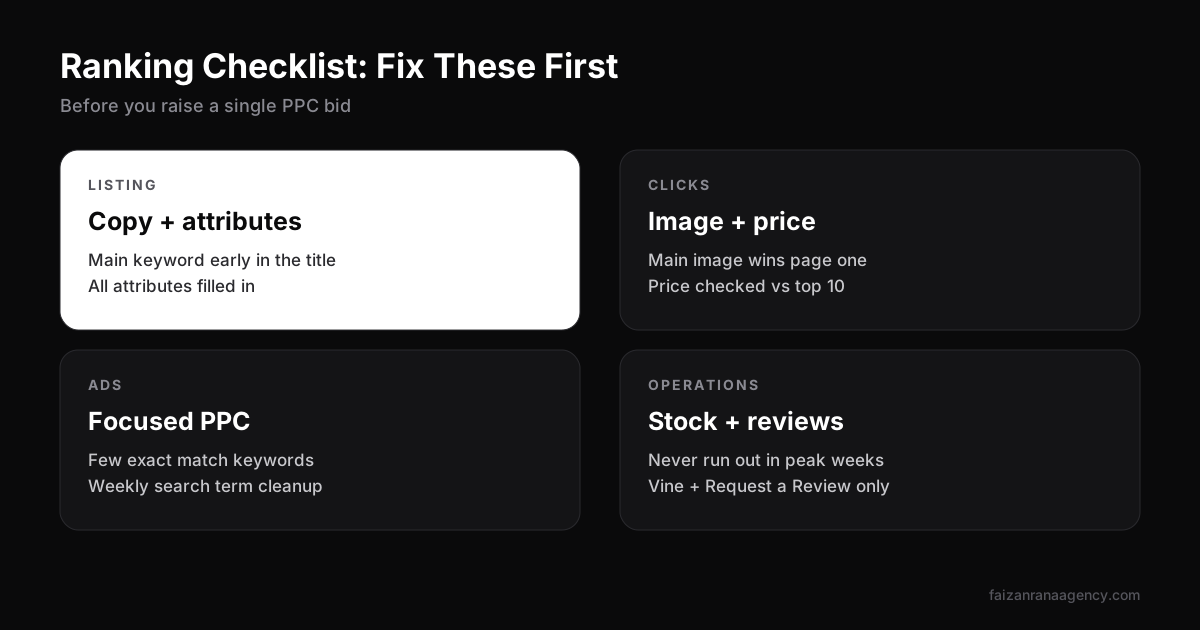
- Main keyword appears early in the title, in natural language.
- Bullets answer the top 5 buyer objections from competitor reviews.
- Backend search terms filled with variants only, under 250 bytes.
- All product attributes completed in Seller Central.
- Main image wins the click against page-one competitors.
- Price checked against the top 10 results.
- Inventory planned so you never run out in peak weeks.
- PPC focused on a few high-relevance exact match keywords (see fixing a high ACoS).
- Reviews collected only through Vine and "Request a Review".
- Rank tracked weekly for your top 10 keywords.
Launching a new product? These signals start on day one, so pair this checklist with our 90-day Amazon product launch playbook.
FAQ
Is the Amazon A10 algorithm real?
Amazon has never used the name A10. It is an industry nickname for changes sellers noticed in how Amazon ranks products, especially the bigger role of conversion and sales velocity.
What is the Amazon A9 algorithm?
A9 was the name of Amazon's search technology unit. Sellers still use A9 to refer to Amazon's product search ranking system in general.
What is the most important Amazon ranking factor?
Relevance gets a listing indexed for a search, but conversion rate and sales velocity for that search decide how high it ranks.
Does external traffic help Amazon ranking?
External traffic that converts adds to sales velocity, which can help ranking. Untargeted traffic that does not convert can hurt conversion rate.
How does Rufus affect Amazon SEO?
Rufus uses listing content, attributes, reviews and Q&A to answer shopper questions, so listings that clearly explain who the product is for and how it differs have an extra way to be found.
Want a second pair of eyes on why a listing is not ranking? Send it to us and we'll tell you what we'd fix first.
Want us to do this for your brand?
Book a 30-minute call and we will scope your project.