Short answer: Yes, Facebook and Instagram ads (Meta Ads) still work for e-commerce in 2026, and for most direct-to-consumer brands they are still the most scalable paid channel. What changed is how they work: Meta's AI now does most of the targeting, so creative, offer and clean conversion tracking decide results. Meta is a poor fit for very low-priced products, brands with no creative budget, or stores that can't track purchases properly.
In this article
Every year someone declares Facebook ads dead. Costs went up, iOS tracking changed, TikTok is cooler. And every year, when we look across the e-commerce accounts we manage, Meta is still where most brands can spend the most money profitably.
That doesn't mean it's easy. Facebook ads for e-commerce look very different from five years ago. Here are the five reasons we keep recommending Meta, and the cases where we tell clients not to bother. Our Meta Ads team uses this exact thinking when planning a new account.
Reason 1: The algorithm does the targeting now
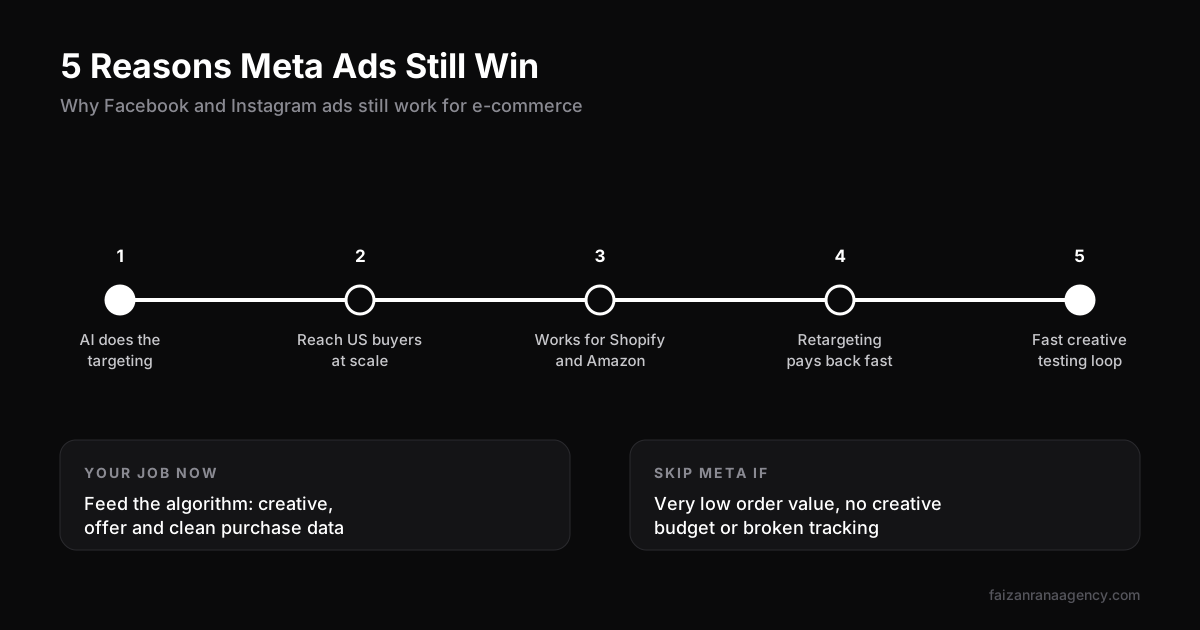
Five years ago, success meant finding the perfect interest stack. Today, Meta's AI finds buyers better than manual targeting in most accounts. Advantage+ sales campaigns (previously called Advantage+ shopping campaigns) and broad targeting let the system look for buyers across Facebook, Instagram, Messenger and the Audience Network.
That shifts your job. You are no longer the targeter. You're the person feeding the system: good creative, a clear offer, and clean purchase data through the Meta Pixel and Conversions API. If those three are right, broad campaigns tend to scale further than anything you could build by hand.
Reason 2: Reach US buyers at scale
Facebook and Instagram still reach a huge share of US adults, across almost every age group and income level. Few channels let a small brand reach that many potential buyers on day one, with visual ads, video, carousels and catalog ads that show the exact product someone looked at.
Google Shopping catches people already searching. Meta creates demand from people who didn't know your product existed. For new or unusual products, that is often the only way to grow.
Reason 3: It works for Shopify and Amazon
For Shopify stores, Meta is usually the main source of new customers. For Amazon sellers, it can send shoppers to a listing to add sales velocity, which helps ranking. Brand-registered sellers can track those sales with Amazon Attribution and may earn Amazon's Brand Referral Bonus. We explain how that velocity affects ranking in how the Amazon ranking algorithm works.
Deciding where to send traffic first? Our Shopify vs Amazon guide helps you pick.
Reason 4: Retargeting still pays back fastest
Most visitors don't buy on their first visit. Retargeting people who viewed a product, added to cart or started checkout is usually the most efficient spend in the account. Tracking changes made audiences smaller than they used to be, but the intent is still there.
The key is building the right audiences and excluding recent buyers so you don't pay to reach people who already ordered. We walk through the five we set up first in how to create custom audiences on Facebook.
Reason 5: The fastest creative testing loop
Creative is the biggest lever left in paid social. Meta lets you test a new hook, format or offer and get a read within days. Our simple testing loop:
- One variable at a time. Test the hook (first 3 seconds) separately from the offer.
- Give each test a fair budget. Enough for the ad to exit learning, judged on cost per purchase, not likes.
- Keep winners, kill losers weekly. Move winning ads into your main scaling campaign.
- Refresh before fatigue. When frequency climbs and results drop, new creative usually fixes it faster than new targeting.
Organic content can feed this loop too. Posts that already perform well on Instagram make strong ad candidates. See whether hashtags still work on Instagram for how organic reach works now. Good creative needs good editing; that's why we pair ads with video editing.
When Facebook ads are the wrong choice
- Very low order value. If your average order is under about $20 and there's no repeat purchase, it's hard to cover the cost of a cold customer.
- No creative capacity. If you can't produce new ads every few weeks, results will fade.
- Broken tracking. Without a working Pixel and Conversions API, the algorithm can't learn who buys.
- A store that doesn't convert. Ads amplify what's there. Fix the site first. The same is true on Amazon, as we explain in why your Amazon ACoS is too high.
The starter account structure we use
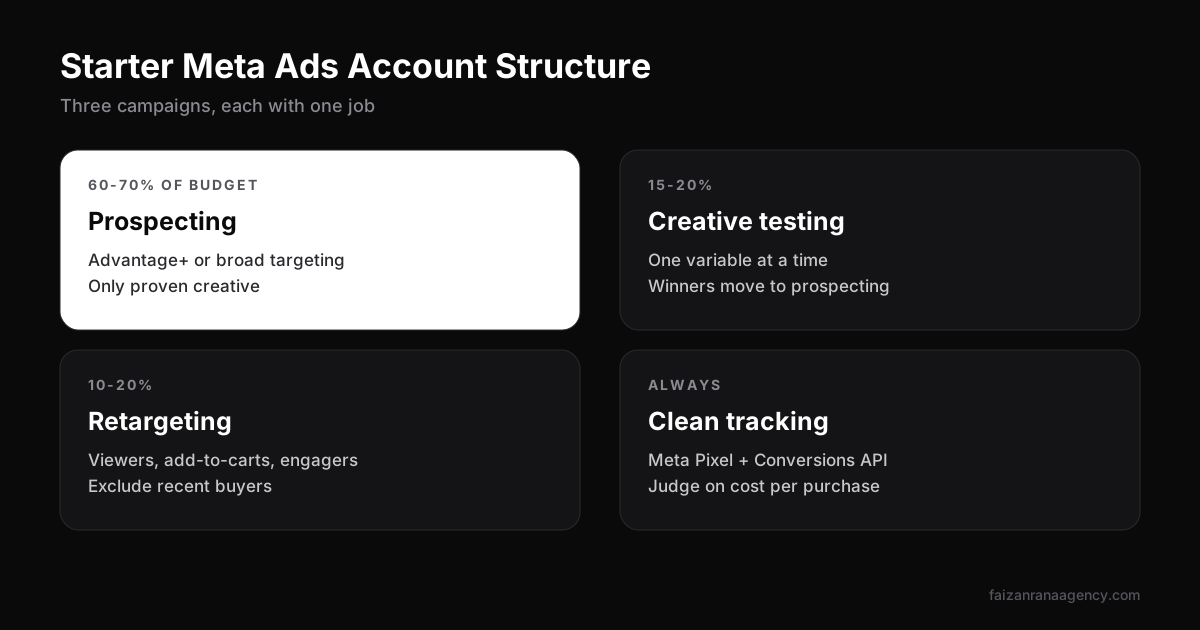
| Campaign | Purpose | Rough budget share |
|---|---|---|
| Prospecting (Advantage+ / broad) | Find new buyers with proven creative | 60 to 70% |
| Creative testing | Test new hooks, formats and offers | 15 to 20% |
| Retargeting | Viewers, add-to-carts, engagers; exclude buyers | 10 to 20% |
Start small, prove a cost per purchase that works for your margins, then scale budget gradually on what's working.
FAQ
Are Facebook ads still worth it for e-commerce in 2026?
For most direct-to-consumer brands, yes. Meta is still one of the most scalable paid channels, as long as you have good creative, a clear offer and working purchase tracking.
How much should I spend on Facebook ads for my online store?
Start with a budget you can afford to test for a few weeks, enough for ads to exit the learning phase, then scale what reaches a cost per purchase that fits your margins.
What is the best Facebook ad campaign type for e-commerce?
For many stores, Advantage+ sales campaigns or broad targeting work best for prospecting, supported by a separate retargeting campaign and a creative testing campaign.
Can Facebook ads help my Amazon sales?
Yes. Sending warm traffic to an Amazon listing can increase sales velocity, and brand-registered sellers can track it with Amazon Attribution.
Should I hire a Facebook ads agency for e-commerce?
An agency makes sense if you lack time for weekly testing or creative production. Look for one that reports on cost per purchase and profit, not just clicks.
Looking for a Facebook ads agency for your e-commerce brand? Book a call and we'll review your account and creative.
Want us to do this for your brand?
Book a 30-minute call and we will scope your project.