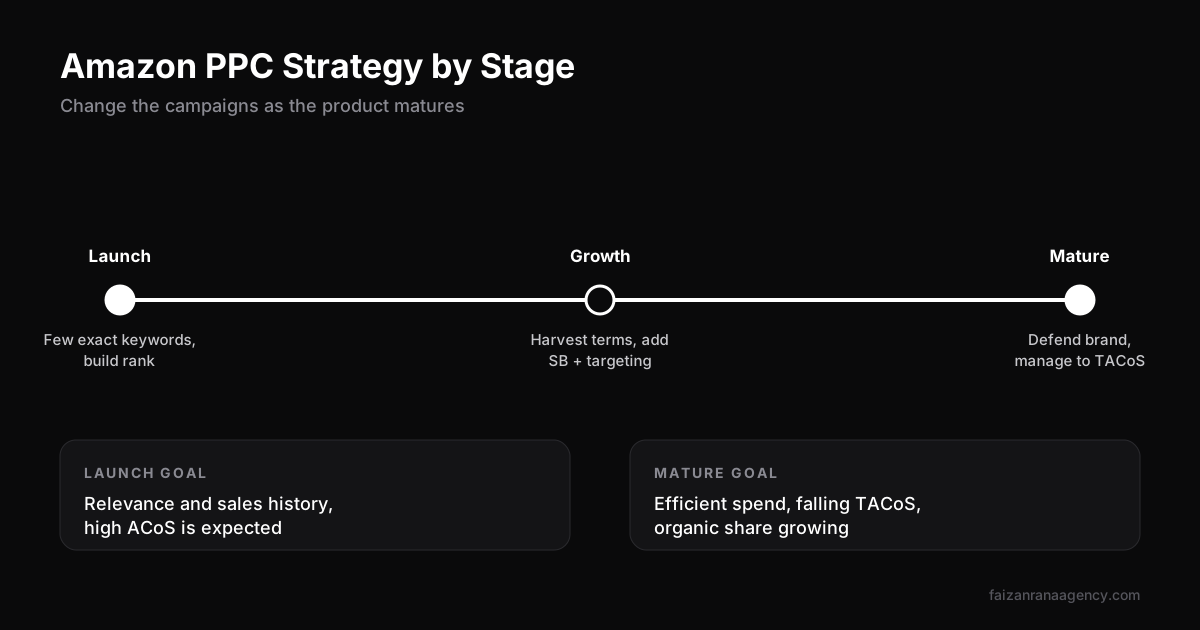
Short answer: A strong Amazon PPC strategy changes with the product's stage. At launch, focus Sponsored Products budget on a few exact match keywords to build rank. In growth, harvest converting search terms, add Sponsored Brands and product targeting, and widen keyword coverage. Once mature, protect your brand terms, use Sponsored Display for retargeting, and manage to a TACoS target rather than ACoS alone.
In this article
Most Amazon PPC accounts we audit don't have a strategy problem on paper. They have a stage problem. A product that has been selling for two years is still running the same campaigns it launched with. Or a brand-new listing is spread across 400 keywords like a mature bestseller.
The fix is simple to say: run a different Amazon PPC strategy for each stage of a product's life. Here is the playbook our Amazon PPC management team uses, stage by stage.
The three ad types and what each is for
| Ad type | Where it shows | Best job |
|---|---|---|
| Sponsored Products | Search results and product pages | Sales and keyword rank. The core of every account |
| Sponsored Brands | Top of search with logo, headline and several products (needs Brand Registry) | Brand awareness, cross-selling, defending branded searches |
| Sponsored Display | Product pages, and off Amazon for retargeting | Retargeting viewers and targeting competitor pages |
Start with Sponsored Products. Add the others once Sponsored Products is profitable, not before.
Stage 1: Launch strategy
Goal: become relevant for a small set of keywords as fast as possible. Profit comes later.
- One exact match campaign with your 5 to 10 most relevant keywords from your keyword research. Most of the budget goes here.
- A phrase/broad campaign on the same core terms at lower bids, to find new search terms.
- An auto campaign at low bids, for research.
- Top of search placement adjustment on the exact campaign, because that's where new listings win the most visibility.
Expect a high ACoS for the first few weeks. That's the price of building sales history. The full launch plan is in our Amazon product launch playbook.
Stage 2: Growth strategy
Goal: widen the keywords you win while bringing ACoS toward your target.
- Harvest weekly. Move converting search terms from auto and broad into exact match campaigns. Add them as negatives in the discovery campaigns so each term lives in one place.
- Cut waste weekly. Add negatives for terms that spend without converting.
- Add product targeting. Target competitor listings where your price, rating or features compare well.
- Launch Sponsored Brands with your best-selling products, and a video ad if you have good footage.
- Group campaigns by goal (rank, profit, research, brand) so budget decisions are easy.
If ACoS climbs during growth, run through the four causes in why your Amazon ACoS is too high before cutting budget.
Stage 3: Mature product strategy
Goal: keep your position efficiently and grow total sales, not just ad sales.
- Defend branded search. Run a low-cost campaign on your brand name so competitors don't take those buyers.
- Sponsored Display retargeting for people who viewed your product but didn't buy.
- Lower bids where you rank organically on page one, and test whether sales hold. Spend where ads still add sales.
- Manage to TACoS. A stable or falling TACoS means ads support the whole business.
- Plan seasonal pushes. Raise budgets ahead of Prime Day, Q4 and your category's peak months.
Bidding strategies explained
Amazon gives you three campaign bidding strategies for Sponsored Products:
| Bidding strategy | What Amazon does | When we use it |
|---|---|---|
| Dynamic bids: down only | Lowers your bid when a click looks less likely to convert | Default for most campaigns, especially discovery |
| Dynamic bids: up and down | Raises bids (up to 100% on top of search) for likely conversions, lowers them for unlikely ones | Proven exact match campaigns where we want rank |
| Fixed bids | Uses your exact bid every time | Tests and very tight budget control |
Pair the bidding strategy with placement adjustments. If top of search converts much better than product pages in your placement report, increase the top of search adjustment rather than raising every bid.
How to split your budget
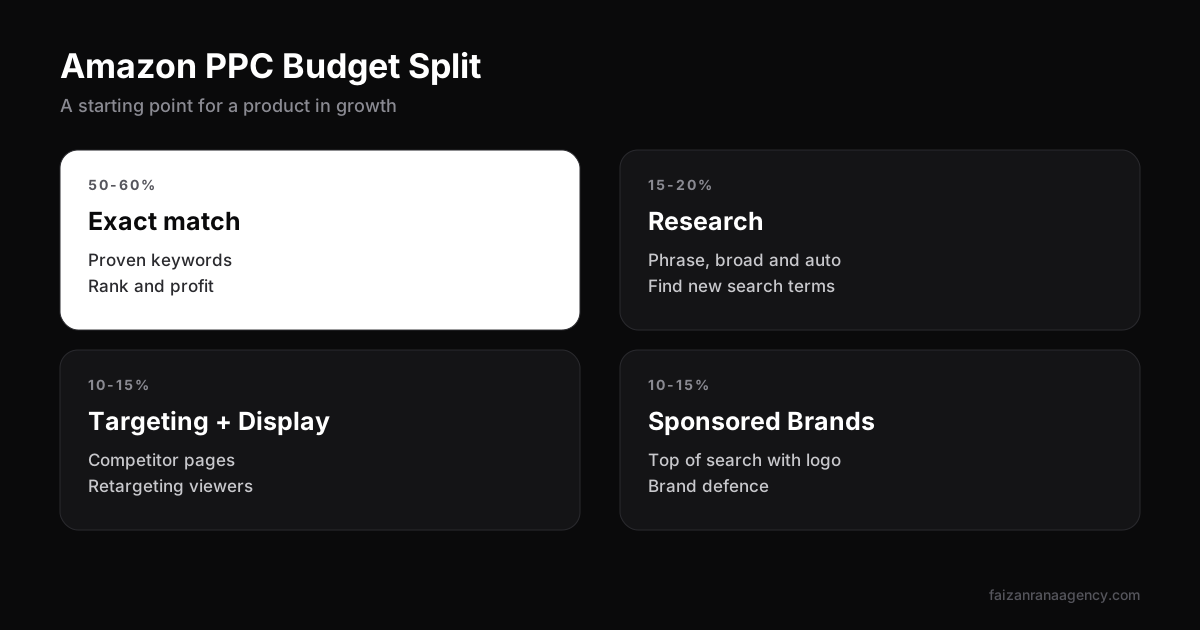
There's no perfect split, but for a product in growth we usually start close to this and adjust monthly:
- 50 to 60% exact match on proven keywords (rank and profit)
- 15 to 20% phrase, broad and auto (research)
- 10 to 15% product targeting and Sponsored Display
- 10 to 15% Sponsored Brands, including brand defence
Never let a campaign run out of budget by midday on your best keywords. A capped campaign misses the evening shoppers.
The metrics that tell you it's working
- TACoS trend: falling or stable while sales grow.
- Organic rank for your top 10 keywords, tracked weekly.
- Conversion rate by campaign: low conversion points to listing or targeting problems.
- Share of sales from ads: should shrink over time as organic grows.
External traffic can support all of this. Many brands add Meta Ads once Amazon PPC is stable. See Facebook ads for e-commerce and how sales velocity feeds the Amazon ranking algorithm.
FAQ
What is the best Amazon PPC strategy?
The best strategy depends on the product's stage: focused exact match campaigns at launch, keyword harvesting and wider targeting during growth, and brand defence, retargeting and TACoS management for mature products.
How should I structure Amazon PPC campaigns?
Separate campaigns by job: exact match for proven keywords, phrase/broad and auto for research, product targeting for competitor pages, and Sponsored Brands for brand visibility and defence.
Which Amazon PPC bidding strategy should I use?
Dynamic bids down only is a safe default. Use up and down on proven exact match campaigns when you want more top-of-search visibility, and fixed bids for tests.
How much should I spend on Amazon PPC?
Base it on your goals and margins. During launch spend more to build rank; once mature, manage spend to a TACoS target that keeps the business profitable.
How often should I optimize Amazon PPC campaigns?
Add negatives and harvest converting search terms weekly, adjust bids when keywords have enough data, and review budget splits monthly.
Want a second opinion on your campaigns? Send us your account details and we'll tell you which stage strategy fits.
Want us to do this for your brand?
Book a 30-minute call and we will scope your project.